

.jpg)
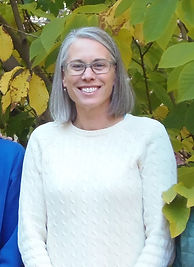
Jared Brabant
Ph.D. Candidate:
Jared is interested in Missouri bumble bee communities and their floral resource usage. His main project investigates the effects that seed source has on bumble bee visitation to native wildflowers.
Email: jmbmdb [at] mail.missouri.edu
.jpg)
Leah Gastonguay
Ph.D. Candidate:
Leah is a MU Life Science Fellow and is interested in techniques to promote plant biodiversity and beneficial insects on farms. She conducts research in commodity crop and specialty crop systems to understand how companion planting, cover cropping, and native habitat plantings influence beneficial and pest insects.
Email: lg7mb [at] mail.missouri.edu

Josh Klostermann
Ph.D. Candidate:
Josh is a student of melittology, botany, and community ecology with the goal of being a regional expert in these fields. His current research is focused on the effects of landscape disturbance and restoration on bee and wasp communities. He is an avid wildlife photographer and all-around bug nut.
Email: jpkhr9 [at] missouri.edu

Stephany Bautista
M.S. Student:
Stephany studies how plant seed origin influences ecological interactions between plants and insects. Her research focuses on milkweed, aphids (Aphis nerii), and monarch butterflies (Danaus plexippus), examining how variation in plant traits and phenology shapes herbivore colonization and monarch oviposition, with implications for restoration and conservation.
Email: sbgcx [at] missouri.edu
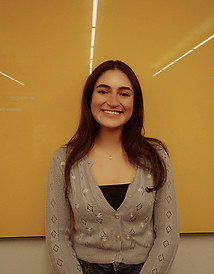
Terry Woods
Research Specialist:
Terry Woods studies best practices for the establishment and management of bumble bee and monarch habitat. He is heavily involved with pollinator outreach and education around the state.

Ryn Kreitz
Undergraduate Researcher:
Ryn is an undergraduate researcher studying the impacts of different farming practices on native plant and insect health as well as the impact of those practices on predator-prey interactions.
Ryn will graduate in the spring of 2026 and plans to pursue their PhD. They have a passion for ornithology, entomology and ecology.

Katie Harris
Ph.D. 2023
Project title: Conserving monarch butterflies through habitat management and policy
Email: katie.harris@xerces.org

Kyle Paddock
Ph.D. 2023
Project title: Effects of stress, genetics, and environment on microbiome composition in western corn rootworm


Binita Shrestha
M.S. 2017
Project title: Quantifying the effects of insectary plants on the abundance of natural enemies: implications for controlling insect pests in an organic cabbage eco-system?


Harper LaFond
M.S. 2020
Project title: Potential vectors of Grapevine Red Blotch Virus in Missouri


Brittani Alexander
M.S. 2016
Project title: Habitat manipulations to enhance abundance and diversity of native bees in Helianthus annuus


Joe LaRose
M.S. 2018
Project title: Grasshopper and bee communities on Missouri prairies: comparing remnants and reconstructions

Camila de Oliveira (2009-2011) A negative effect of a pathogen on its vector? A plant pathogen increases the vulnerability of its vector to attack by natural enemies
Andrew Fill (2010-2011) Non-consumptive effects of a natural enemy on a non-prey herbivore population
Jeb Newman (2010) Do predator non-consumptive and consumptive effects scale with density in the same manner?
Kathryn Ingerslew (2011-2012) Parasitoid interactions mediated by non-consumptive effects
Joe Krauska (2014-2015) The contribution of non-consumptive effects to the biological control of pest caterpillars
Tanner Leslie (2016-2018) Optimizing the use of cover crops to suppress weeds, enhance soil health, and attract beneficial insects in an organic watermelon system
Emma Critchfield (2021-2023) Behavioral interactions between aphids and their natural enemies.
Harper Smith (2017-2018) Effect of abiotic stress on parasitoid-host interactions
Mason Ward (2018-2022) Say yes to the host: The effects of drought on parasitoid wasp behavior
Kelsi Glover (2020-2021) Host plant species impact on prey susceptibility